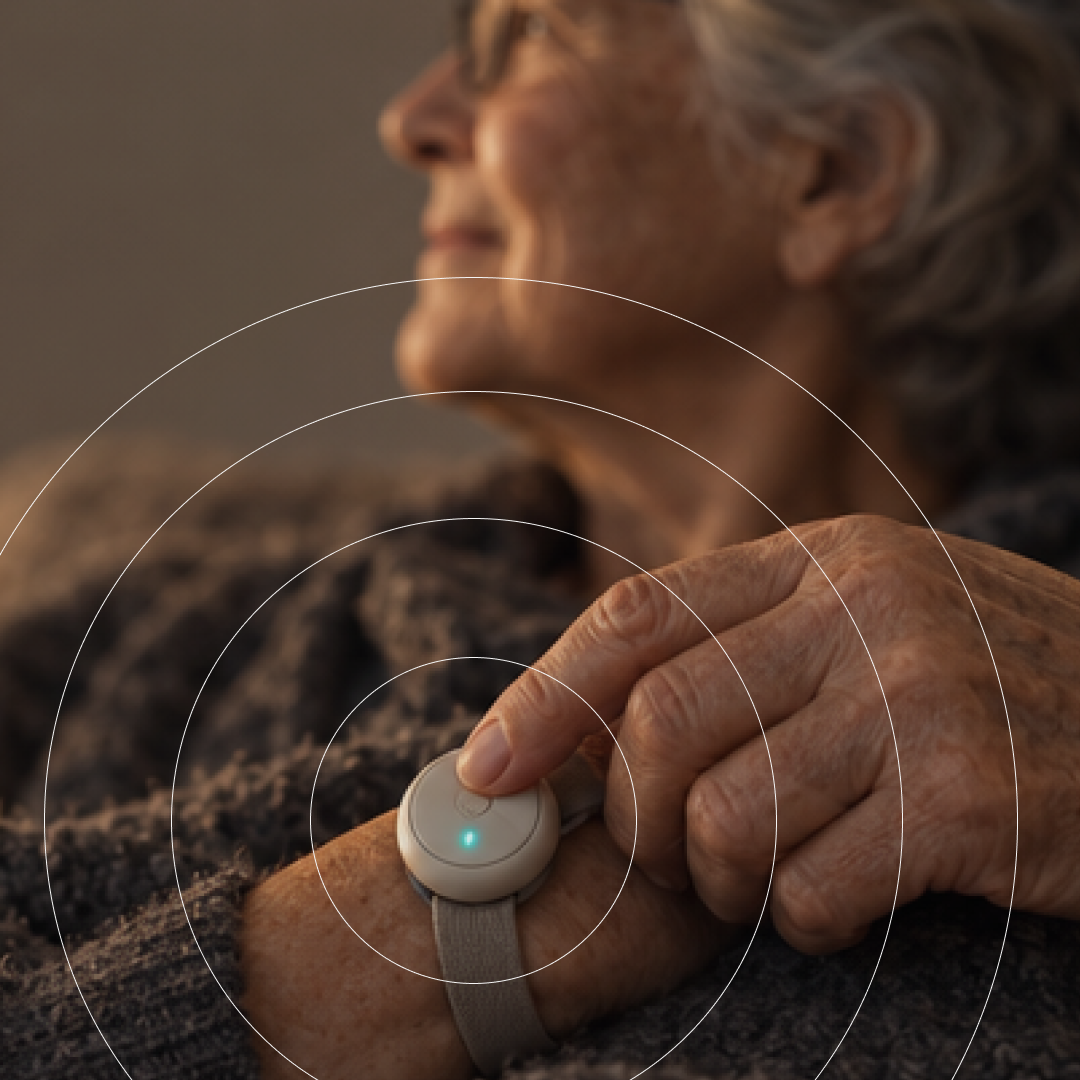
When a telecare alarm is triggered, the response needs to be fast and accurate. But the alarm itself is only part of the picture. How it was handled, what decision was made, who was contacted and what the outcome was are all pieces of information that care providers need access to.
For many municipalities, visibility into what happens after an alarm is triggered is limited. The data exists, but it is scattered across systems, making it difficult to build a complete picture of how the service is actually performing.
What gets logged — and what doesn't
A telecare alarm generates data at two points: at the device level, when the alarm is triggered, and at the monitoring centre level, when it is received and acted upon. In many systems, these two data streams exist separately, making it difficult to get a complete picture of what happened during a specific alarm event.
A combined event log, one that brings together data from both the alarm device and the monitoring centre in a single view, changes that. It gives care providers a full, accurate record of every alarm: when it was triggered, how it was classified, what action was taken, and what the outcome was.
A combined log makes it easier to identify patterns, investigate incidents, demonstrate compliance and have informed conversations with commissioners and partners. If the same resident is triggering frequent alarms at similar times, that pattern becomes visible and actionable.
Among the nine suppliers awarded a place in Sweden's ADDA national framework agreement for digital care alarm services, only three offer a combined event log. All three are Skyresponse partners.
From data to decisions
Alarm statistics, such as response times, call volumes, escalation rates, alarm frequency by resident or scheme, give operational managers the information they need to allocate resources effectively, identify pressure points and make evidence-based decisions about service delivery.
FarrPoint's Telecare Benefits Framework, a structured evaluation of digital telecare services commissioned by the Digital Office for Scottish Local Government, found that response services with good data visibility contributed to meaningful reductions in ambulance call-outs and emergency bed days. For a typical provider with 4,000 service users, that translated to 870 fewer ambulance call-outs and 1,315 fewer emergency bed days annually. Services that can see what is happening, respond to it, and adjust over time are the ones that produce results like these.
Clinical competence when it matters
For most telecare alarms, a trained operator is equipped to assess the situation and determine the appropriate response. But some alarms involve service users with complex health needs, where the right decision requires clinical judgement.
Access to nursing competence, the ability to connect an operator or responder with a qualified nurse when needed, is a feature that can make a material difference in those situations. It supports faster, more accurate triage, reduces unnecessary escalation to emergency services, and gives service users and their families greater confidence that the right expertise is available when it is needed.
Among the suppliers in the ADDA framework, the majority of Skyresponse partners offer access to nursing competence as part of their service. It is one of the features that distinguishes a monitoring centre built for complex care environments from one designed for simpler use cases.
What to require
For municipalities and care providers evaluating telecare services, operational transparency and clinical support are worth making explicit in the procurement process. The key questions to ask:
- Does the system provide a combined event log from both the alarm device and the monitoring centre? Can we access alarm statistics and reporting in a format that supports operational decision-making?
- Is nursing competence available when needed, and how quickly can it be accessed?
- How does the provider support ongoing quality review and service improvement?
The answers determine whether a telecare service can be actively managed and improved over time, or whether it simply operates in the background with limited visibility.
The bigger picture
Telecare services that work well do so because the people delivering them can see what is happening and act on it. That requires data, tools and clinical support built into the service from the start.
The questions municipalities ask at the procurement stage determine what kind of service they end up with. Asking about event logs, reporting capabilities and clinical support early makes it possible to build a service that actively improves over time, rather than one that simply operates in the background.
Skyresponse is a vendor-neutral, cloud-based alarm management platform supporting response centres, solution providers and care organisations across Europe.
Have questions about your digital transition? Contact us to discuss how Skyresponse can support your next steps.